
Finding People Through Asheboro Records
Choose the first record by what is already known. A full or partial name can lead into recorded deeds, state court cases, voter data, business filings, or a professional license. An address works best in Randolph County Public GIS because the parcel result can supply an owner name, mailing address, deed reference, and ten-digit parcel identification number. An old school, mill, church, or family connection calls for a different path through staff lists, newspapers, yearbooks, estate files, and the Randolph Room.
Asheboro is the Randolph County seat, but city and county records are not interchangeable. City departments keep council, planning, permit, and city administrative files. County offices keep deeds, tax parcels, elections, and local vital records. The Clerk of Superior Court has court and estate files. State portals add cases from other counties, voter files, licenses, business entities, unclaimed property, and correction records. A sound match uses at least two records with dates that make sense together.
- Write down the name, spelling variants, known place, and a useful date range.
- Search the record system that fits the known fact, such as GIS for an address or deeds for an owner.
- Save an exact identifier, including a case number, deed book and page, parcel number, or license number.
- Compare the result with one independent source and check when each record was last current.
- Contact the actual custodian for an older record, full file, or official copy that is not online.
A phone number may be less useful in official files. Try a library reverse directory for an older number or use the number only to confirm a name found elsewhere. Do not merge two people merely because their names match.
Asheboro Records Offices by Custodian
Three downtown offices hold many of the strongest Asheboro identity trails. The Register of Deeds records land instruments, plats, assumed names, marriage licenses, and county birth and death records. The Clerk of Superior Court keeps civil, criminal, divorce, estate, and special-proceeding files. City Hall routes requests for council actions, planning files, permits, and records created by city departments. The detailed access rules and copy process are covered with Asheboro public records.
Randolph County Register of Deeds
158 Worth Street
Asheboro, NC 27203
336-318-6960
Randolph County Clerk of Superior Court
176 East Salisbury Street
Asheboro, NC 27203
336-328-3100
Asheboro City Clerk and Departments
146 N. Church Street
Asheboro, NC 27203
336-626-1201
The county Tax Department and Elections office sit outside this three-card core, yet each has its own records. Send a clear request to the office that created or maintains the material. North Carolina Chapter 132 does not require special words, and it calls for access as promptly as possible rather than within a fixed number of days.
Asheboro Deed Search Since 1986
The Randolph County recorded real-estate index and images run from January 1, 1986 to the present. Images begin at Book 1173, page 853, while historical books and indexes cover Books 1071 through 1172. Plat images reach back to Book 1. These dates mark online coverage, not the start of land records. Older Asheboro deeds may require the office’s historical viewer, index books, microfilm, State Archives material, or staff help.
Search a person as both grantor and grantee. A grantor gives or transfers an interest, while a grantee receives it. The Register advises using Advanced Search with “contains” after its system update. For records indexed from 1986 through 1993, also try Chas, Robt, Thos, and Wm. Those short forms can recover Charles, Robert, Thomas, and William entries that a modern spelling misses.
| Deed search control | What to enter | Best use |
|---|---|---|
| Name | Person or firm, with variants | Find grantor and grantee entries |
| Book and page | Direct record reference | Open a known instrument |
| Subdivision | Recorded plat name | Connect a lot to its map |
| Date range | Recording dates | Narrow a common name |
| Document type | Deed, trust, release, or other type | Reduce unrelated results |
One local handoff prevents wasted time. A GIS deed reference ending in “E” points to an estate book held by the Clerk, not an ordinary deed book at the Register.
Asheboro Property Search From Address
Randolph Public GIS turns an address into a person trail. Search by owner, location address, property description, or ten-digit PIN. The parcel panel can show owner name, ownership mailing address, situs address, land and building values, acreage, deed book and page, legal description, tax districts, and sale references. “Situs” means where the parcel lies. The mailing address is where tax mail goes, and it may point somewhere else.
An Asheboro postal address does not prove the parcel lies inside city limits. Open Community Info to check the municipality and tax district before looking for city permits. City property can then be checked in the address-driven iWorQ portal or requested from Planning and Zoning or Inspections. County inspections are the better route outside municipal jurisdiction.
- PIN
- The ten-digit parcel identifier used to distinguish land records.
- Plat
- A recorded survey map showing lots, roads, boundaries, and related details.
- Book and page
- The location of a deed, plat, or estate entry in an official record series.
- Situs address
- The location of the parcel, which may differ from the owner’s mailing address.
Note: A parcel owner may not live at the property, so compare the deed date, mailing address, and another dated source.
Asheboro Court Records After eCourts
Randolph County joined Enterprise Justice and eCourts on October 14, 2024. The statewide N.C. eCourts Portal now accepts an anonymous Smart Search by case number or party or business name. Advanced filters can narrow location, party criteria, case type, status, and filing date. Public case summaries may show the case number, court, filed date, parties and roles, attorneys, events, hearings, and disposition.
Asheboro has no separate municipal court. Local state cases go through Randolph County Superior or District Court. The Portal is a search and summary surface, not a promise that every public document is online. Courthouse self-service terminals support broader criminal, civil, estate, and special-proceeding queries, and the Clerk holds the paper or electronic case file. Juvenile, adoption, sealed, expunged, and other confidential material will not be opened through an ordinary name search.
| Asheboro court trail | Records covered | How to search | Full-file route |
|---|---|---|---|
| Superior Court | Felonies and higher-value civil matters | Portal and terminal | Randolph Clerk |
| District Court | Misdemeanors, lower-value civil, and family matters | Portal and terminal | Randolph Clerk |
| Clerk estates | Probate and special proceedings | Portal where public; terminal | Estates or Special Proceedings counter |
| Federal court | Middle District of North Carolina cases | PACER | Federal clerk or NARA |
Imported events from before the county’s eCourts launch can display a midnight timestamp. Treat that as a conversion feature, not proof that an event occurred at that hour.
Asheboro Vital Records Search Routes
The Randolph Register of Deeds issues certificates for births and deaths that occurred in the county and for marriage licenses filed there. A certified copy costs $10. Eligible requesters include the subject and listed close relatives, authorized representatives, and a person who establishes a need tied to personal or property rights. Mail requests require a signed application, payment, a return envelope, and a copy of current government photo identification. The Worth Street office accepts eligible in-person requests and also links an authorized online vendor.
North Carolina Vital Records covers statewide birth, death, marriage, and divorce events. Its standard $24 fee includes one three-year search and one certificate if found. The state service portal handles online requests and case management, while mail forms remain another route. A divorce judgment comes from the Clerk in the county where the divorce was granted, while the state issues a divorce certificate. Uncertified vital copies are open to public inspection under state law, but they are not legal certificates.
North Carolina does not use a simple rule that opens every birth or death certificate after a set number of years. Statewide birth and death registration generally begins in 1913. Earlier family research moves through marriages, deeds, estates, churches, cemeteries, newspapers, delayed births, and archival sources. Adoption files remain sealed under separate law.
Note: Decide whether an uncertified research copy or an official certificate is needed before paying for a vital-record order.
Asheboro People Search Through Estates
An estate file can connect a deceased person with heirs, interested parties, property, and mailing addresses. Start in Portal where the estate or related special proceeding is public, then use the complete case number at the Clerk. Ask to inspect the public estate file and any linked special proceeding. A deed made by an estate may provide the next recorded property step, while an obituary can name relatives and places that explain the legal file.
For an old address, begin with the current parcel, follow its deed book and page, and work backward through prior references. Reverse directories, censuses, and newspapers can identify occupants who were not owners. For an heir trail, compare probate names with deeds and the obituary. A shared surname alone is weak proof. Middle names, dates, parcel references, and the order of events make the link stronger.
Use Asheboro records only for lawful personal research. Public access does not permit stalking, threats, repeated harassment, or harm.
Asheboro Historical Records Beyond Portals
Randolph County was formed from Guilford County in 1779, and Asheboro became the county seat. Records before that point may follow an older jurisdiction. The State Archives preserves an unusual set of named local sources, including a 1780 confiscated-property inventory, an 1849 Asheboro commissioner minute, early liquor licenses, naturalization proceedings, pensions, oaths, grist-mill records, and mining disputes. These lists catch people who may never appear in a modern portal.
The Randolph Room genealogy holdings extend the search through family and surname files, cemetery records, maps, tax lists, deeds, wills, estates, city directories, church histories, school materials, and newspaper microfilm. Its documented Courier Newspaper Obituary Index spans 1903 through 1929. Courier-related newspaper reels at the State Archives stretch across title periods from 1881 through 2017.
The missing 1890 federal census makes these local records far more than background reading. Directories, tax lists, deeds, and newspaper notices can rebuild a household or address trail. The Randolph Room also lists an 1843 Asheboro town map and mill or farm surveys, which can translate an old place description into a deed or parcel search.
Asheboro Directory Search for Public Staff
Public staff records answer a narrow but useful question: which office, school, or agency is tied to a name? Asheboro’s city pages list departments, leaders, titles, office numbers, and contact links rather than private residents. The Randolph County School System offers a searchable staff list. State employees can be searched by first or middle name, last name, and agency in North Carolina’s directory.
The captured City of Asheboro department index records its layout at the time of research.
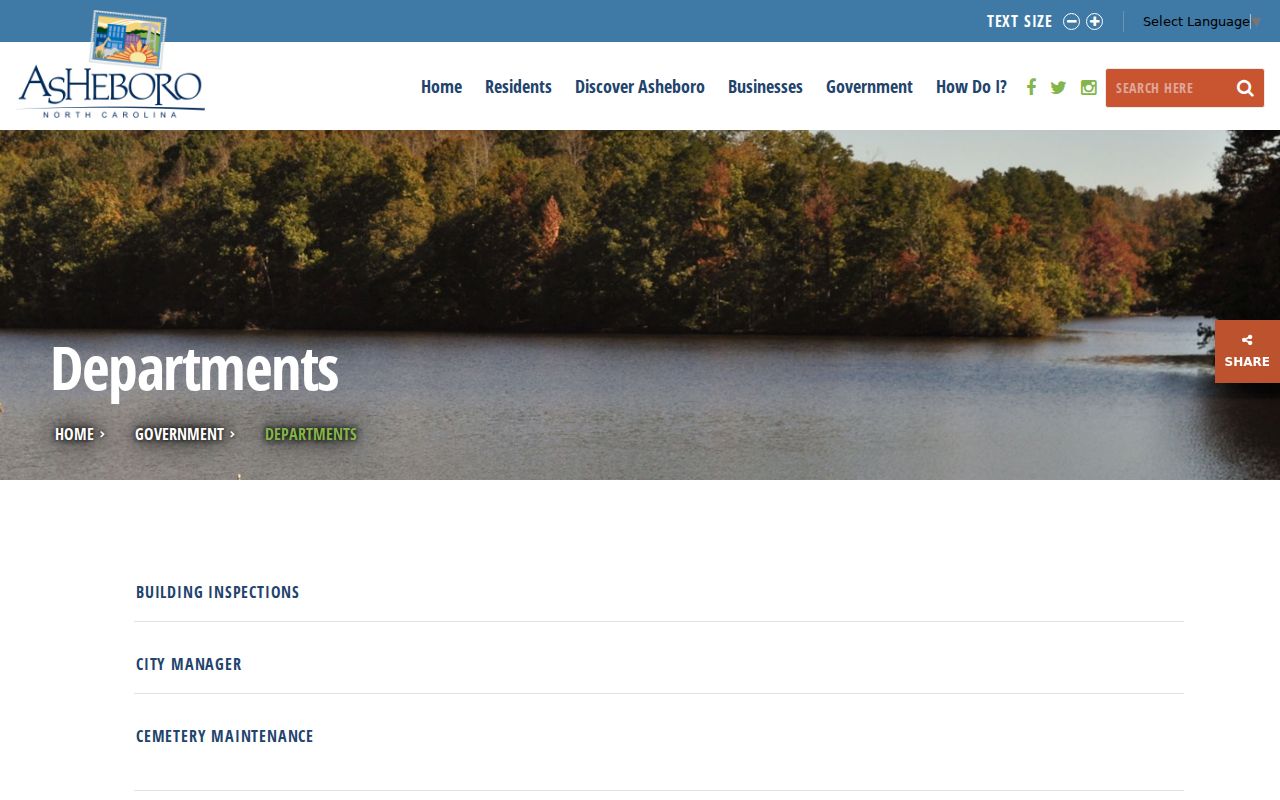
Its department-by-department layout helps route a records request and confirm a public official’s role, though it is not a unified resident directory. The Randolph County School System staff directory provides another official name and department search.
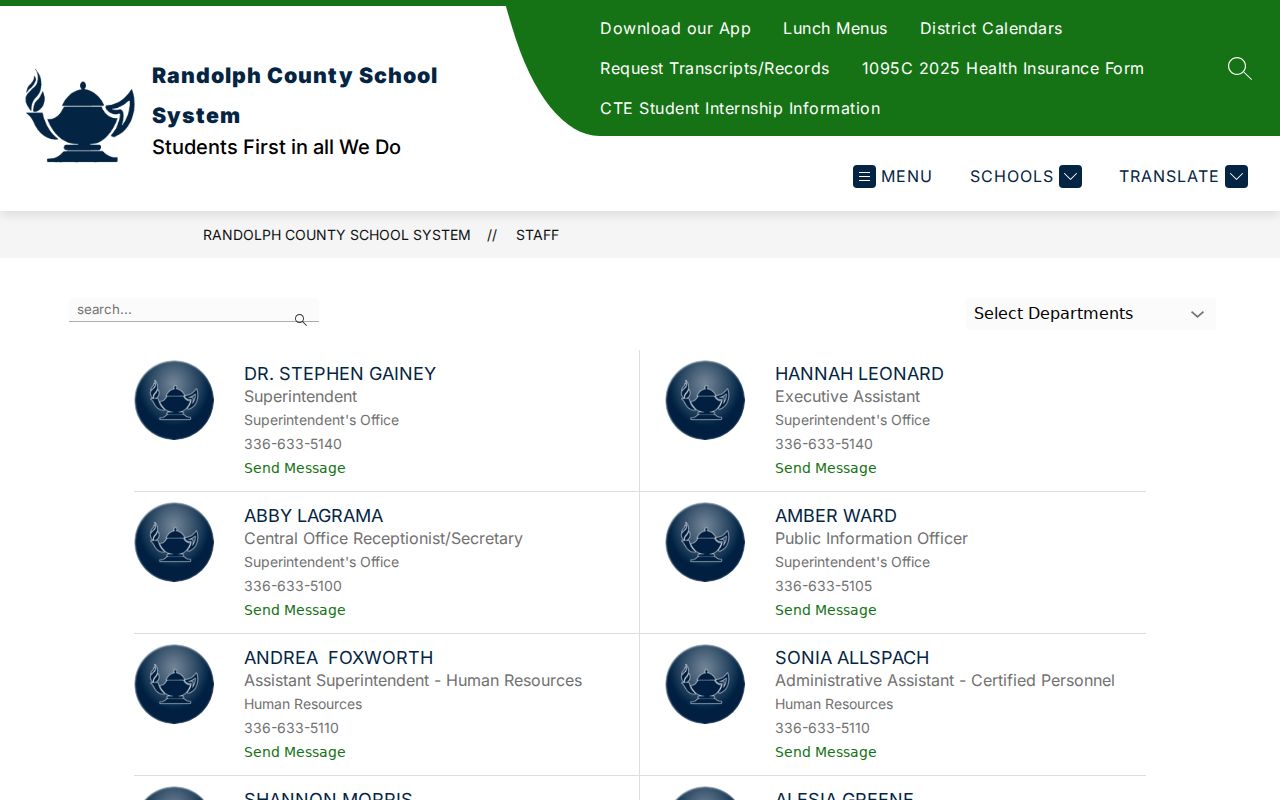
A school listing can confirm a staff role and contact channel. It should not be treated as proof of a private home address or family relationship. For a broader treatment of staff, historic, and record-based lists, use the Asheboro people directories.
Asheboro Business Records Name Match
A business name can lead to a person through the North Carolina Secretary of State. Search the entity’s legal name, then inspect status, formation, registered agent, office address, and document history. Officers or managers may appear in annual reports even when they are absent from the summary. Assumed business names are filed with the Register of Deeds, so a local trade name may require both county and state records.
Professional licenses are split among boards. The state license hub helps identify the correct regulator, while the issuing board provides the actual verification. Medical, nursing, legal, contracting, real-estate, and cosmetic-art tools can show a name, credential type or number, status, location, and public discipline where applicable. The city and county do not maintain one license for every business.
| Asheboro business trail | Name evidence | Limit |
|---|---|---|
| Secretary of State | Entity, registered agent, filings | Managers may be in annual reports |
| Assumed-name record | Business name and filer | County filing, not a full license |
| Issuing board | Licensee, status, public actions | Fields vary by profession |
| Permit or code file | Owner, applicant, contractor, site | Jurisdiction and module matter |
Asheboro Unclaimed Property Search
North Carolina’s unclaimed-property database offers a useful statewide name trail. A result can connect an owner to a reported address and the business that reported the property. It is not proof of a current residence, and common names still need another match. Search a former Asheboro resident under current and prior names, then follow the official claim process if the property appears to belong to that person.
The official NCCash name search was captured for the Asheboro research set.
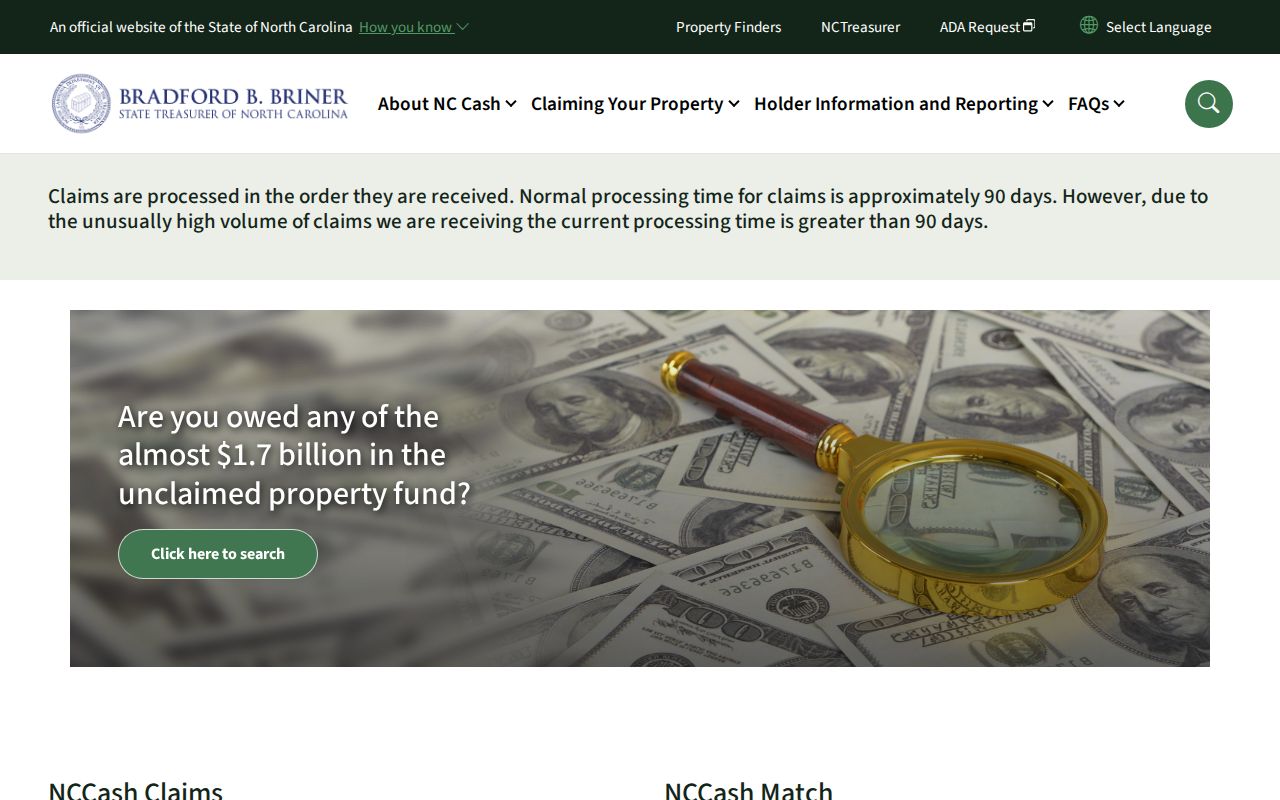
The form offers a direct route to search and claim without paying someone merely to identify property. Confirm the reported name and location before drawing any link to a present-day Asheboro resident.
Asheboro Voter Records Snapshot
The NCSBE Voter Search can confirm a public voter name, status, county, registration date, party affiliation, precinct, districts, polling place, and participation history. It never shows a ballot choice. Start with the last name and Randolph County, then add a first name or year of birth only when needed to separate results. Full birth dates, identification numbers, email addresses, registration-agency identity, and voter identification images are confidential.
Randolph Elections also offers a counter, email requests, and targeted list access. State registration and voter-history files are available as machine-readable downloads with layouts and codes. GIS precinct layers answer boundary questions that a name result cannot. Historic searches move to Elections, the Archives, board minutes, canvass files, and Randolph Room newspapers because a current entry does not prove past residence.
Protected voters may use the statutory address process with a qualifying protective order or current Address Confidentiality Program card. The protected address remains available for limited official needs, while other nonconfidential registration fields stay public.
Note: Save the lookup or file snapshot date because voter status, precincts, districts, addresses, and party data can change.
Asheboro Records Privacy Controls
Online access has firm limits. North Carolina law restricts juvenile and sealed court material, adoption files, DMV personal data, confidential voter identifiers, protected addresses, military discharges, parts of personnel files, and many criminal-investigation records. Asheboro Police can still provide specified public arrest and incident information under G.S. 132-1.4 when a request identifies the incident number, date, address, or involved name.
Randolph County accepts a no-fee request to remove certain sensitive numbers from online recorded-document images. The covered data include Social Security, taxpayer, driver or state identification, passport, account, card, and PIN or password details. The requester must identify the document and exact location of the data. This removes qualifying details from the online image; it does not erase the whole public instrument.
Qualifying survivors can seek a substitute address and mail forwarding through North Carolina’s Address Confidentiality Program. It does not automatically remove older documents. A person concerned about exposure should address the source record and official protection process, not assume that an opt-out elsewhere changes the government file.
Verify Asheboro People Search Matches
Official records and compiled search results serve different roles. A compiled result may bring phone, email, address, and relative data together quickly, but the data can be stale or combine two same-name people. An official record has a defined custodian and purpose. Even then, a parcel mailing address, voter address, court party address, and registered-agent address each mean something different.
| Source type | Strength | Best check |
|---|---|---|
| Compiled people result | Fast lead across many sources | Confirm at the originating office |
| Official online index | Exact identifier and dated entry | Open the record image or full file |
| Certified copy | Official copy of the held record | Check whether its facts remain current |
| Library or newspaper item | Rich family and address context | Compare with an original record |
The strongest Asheboro match joins a precise identifier with a matching name and date. Use a case number, instrument reference, parcel PIN, license number, or voter identifier when one is available. Add middle names, spouse or relative names, addresses, and chronology. A negative online search is weak evidence because spelling, coverage dates, older systems, and closed material can hide a real record.